AI dubbing vs. subtitles: which should you use?
When subtitles are enough, when a dub earns its cost, and how to decide for your own videos, with a decision framework instead of a blanket answer.
6 min read
Ask ten people whether subtitles or dubbing is better and you’ll get ten confident answers. Most of them are describing their own habits. Someone who grew up watching films with subtitles finds dubbing odd. Someone who didn’t finds subtitles exhausting.
The honest answer is that it depends on what your video is, who is watching, and where. This piece gives you a way to decide, and it says plainly when subtitles are the better call, even though we make a dubbing product.
What each one actually changes
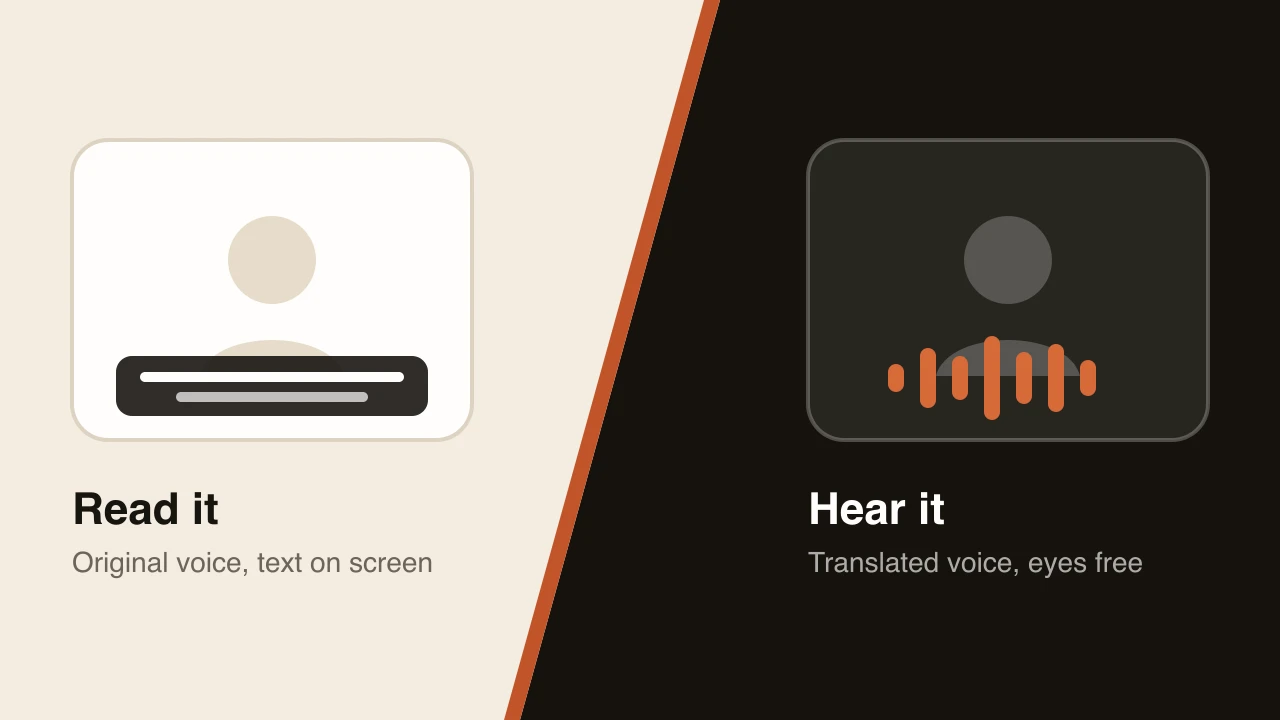
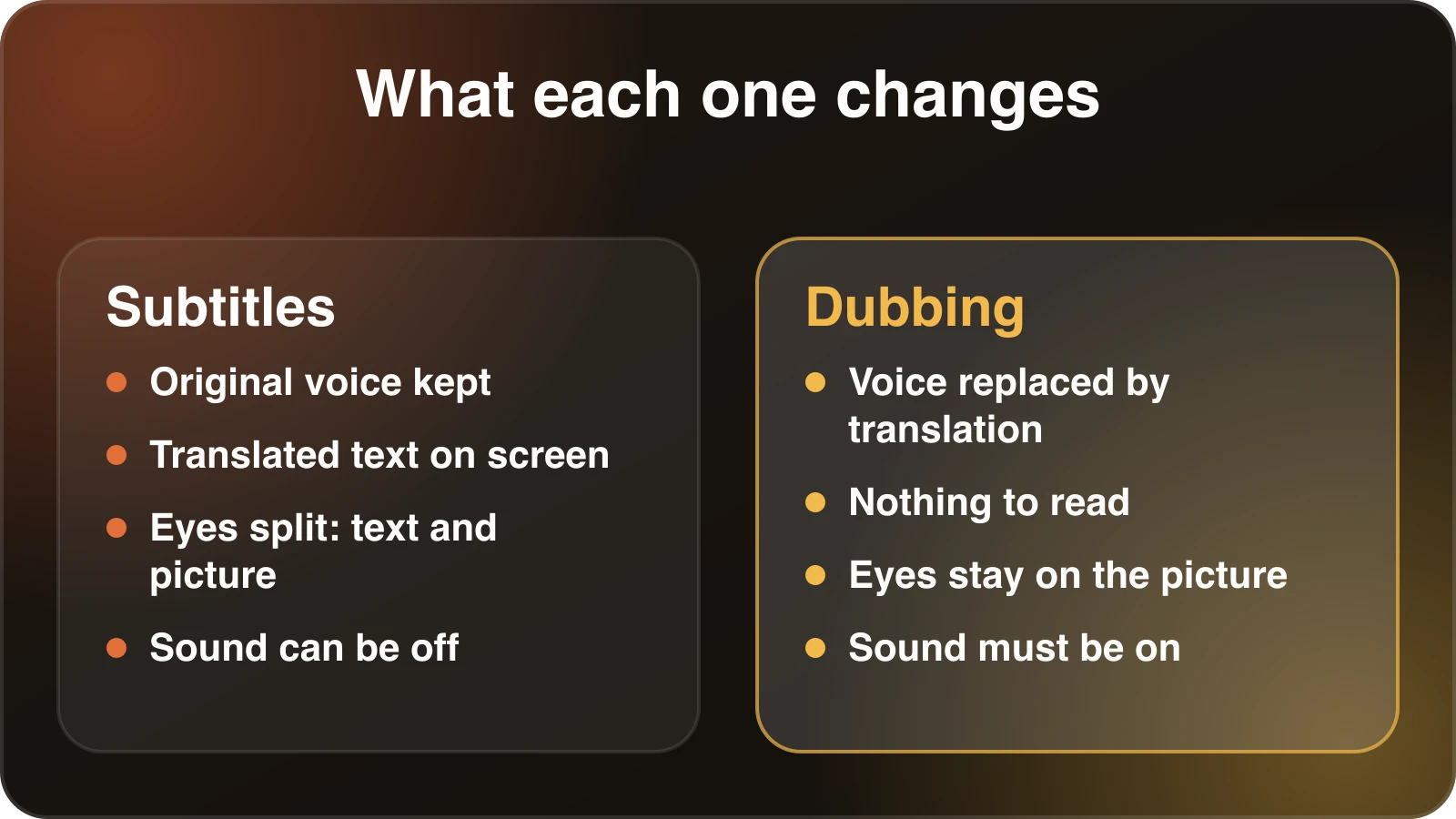
Subtitles keep the original audio and add translated text. The viewer hears the real speaker, with their real voice and delivery, and reads along.
Dubbing replaces the audio with a translated voice track. The viewer’s eyes stay on the picture.
That sounds like a small difference. It isn’t, because reading and watching compete for the same attention. A subtitle reader looks at the bottom of the screen for a large share of the video. For a talking-head interview that costs nothing. For a screen recording, a cooking demo, or a workout, where the picture is the point, it’s a real tax.
Where subtitles win
Let’s start with the cases where we’d tell you to use subtitles.
Speed of production and ease of checking. A subtitle file is plain text. Anyone who reads the language can verify it in minutes. A dub needs to be listened to.
Authenticity matters more than convenience. Documentaries, news, and interviews where the speaker’s own voice carries weight are well served by subtitles. Hearing someone speak, even in a language you don’t understand, tells you things a translated voice doesn’t.
Sound-off viewing. On many social feeds, a large portion of videos are watched without sound. Captions are the way people consume those videos regardless of language. A dub does nothing for a silent viewer.
Accessibility. Captions help deaf and hard-of-hearing viewers, people in noisy places, and people who simply process text better. You’ll often want them even when you also dub.
Language learners. People trying to learn English often like hearing the original and reading the translation.
Where dubbing wins
The picture needs attention. Tutorials, software walkthroughs, product demos, fitness and cooking content. If the viewer has to look at what you’re doing, reading is a poor trade.
Longer content. A ten-minute video with subtitles is fine. A ninety-minute course lecture is tiring. Reading while listening to a language you don’t understand is cognitive work, and it adds up.
Audiences who read less comfortably. Younger children, older viewers with weaker eyesight, people with limited literacy, and viewers in markets where the primary mode of media consumption is audio.
Markets with a strong dubbing tradition. In several countries, audiences are used to dubbed content and expect it. Offering only subtitles can feel like an afterthought.
Listening contexts. Podcasts, driving, cooking, commuting. When people aren’t looking at a screen, subtitles can’t help them at all.
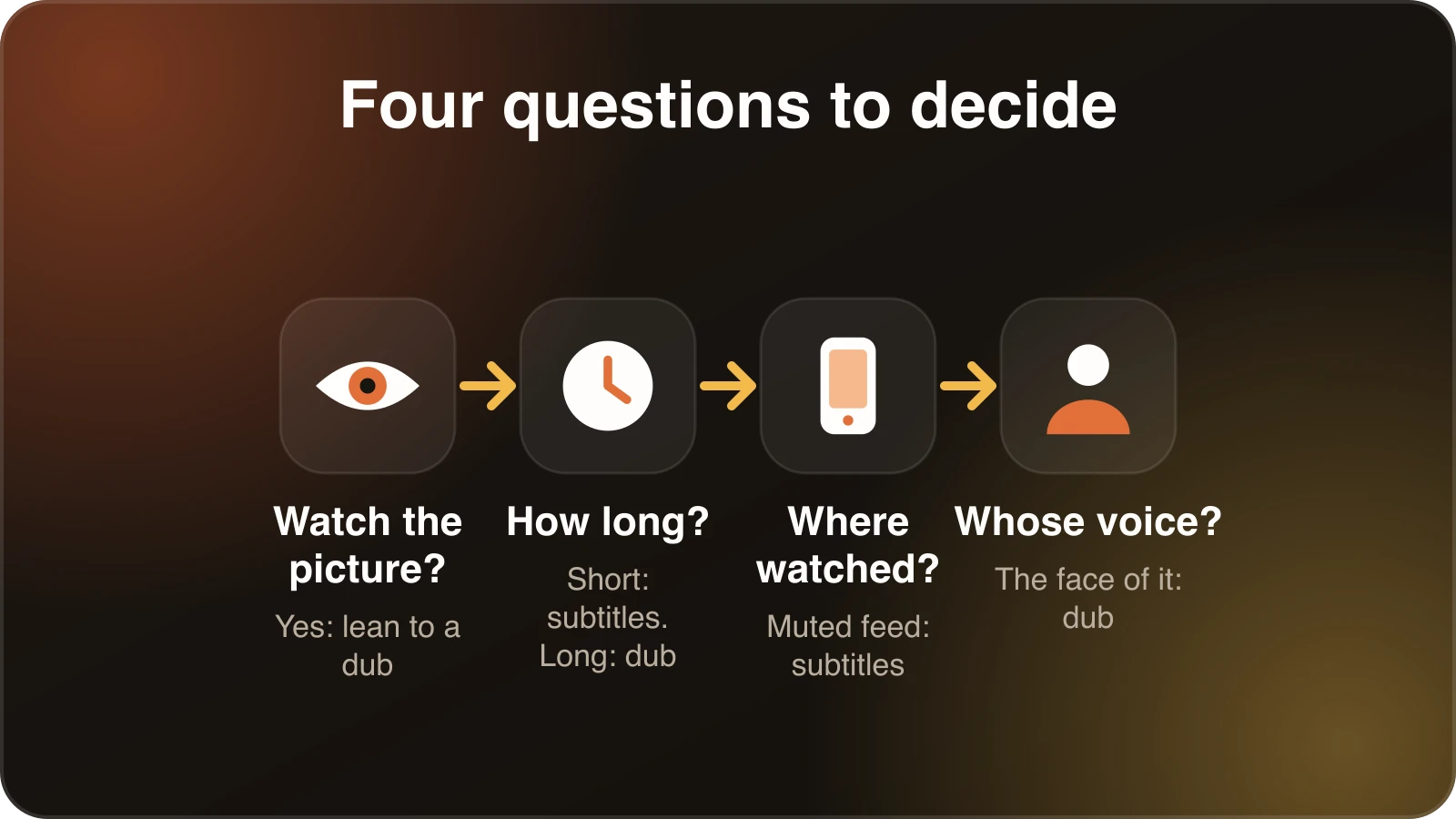
The decision, in four questions
We find it easier to decide by asking questions about the video rather than by debating the two formats in general.
1. Does the viewer need to look at the picture? If yes, lean toward dubbing. If it’s mostly a person talking, subtitles are fine.
2. How long is it? Under three or four minutes, subtitles rarely bother anyone. Over twenty, dubbing starts to look better.
3. Where will it be watched? Muted social feed: subtitles. Course platform, YouTube, or a long-form podcast: dubbing is on the table.
4. Does the speaker’s identity matter? If you’re the brand, the face of the channel, or the teacher, keeping your voice across languages is valuable. A modern AI dub can carry your voice into another language through voice cloning. If your video is a news clip, probably not.
If your answers are mixed, you’re probably in the “both” category, which is common.
Doing both
The best results are often a dub with optional subtitles. That’s how many streaming services handle foreign content: you choose the dubbed audio, and you can add subtitles in either language.
The workflow is straightforward. The same transcript used for translation can generate both the dub and the subtitle file. With Dubtitle, you edit the translated lines in Studio once, then use the same corrected text for both outputs. If you already have subtitles in SRT format and want to work with them, our SRT converter is a free helper for that.
Costs and effort
Subtitles are cheaper and quicker. They also need less review, because a mistake in a subtitle is visible to anyone who reads it, whereas a mistake in a dub can sit unnoticed until a native speaker complains.
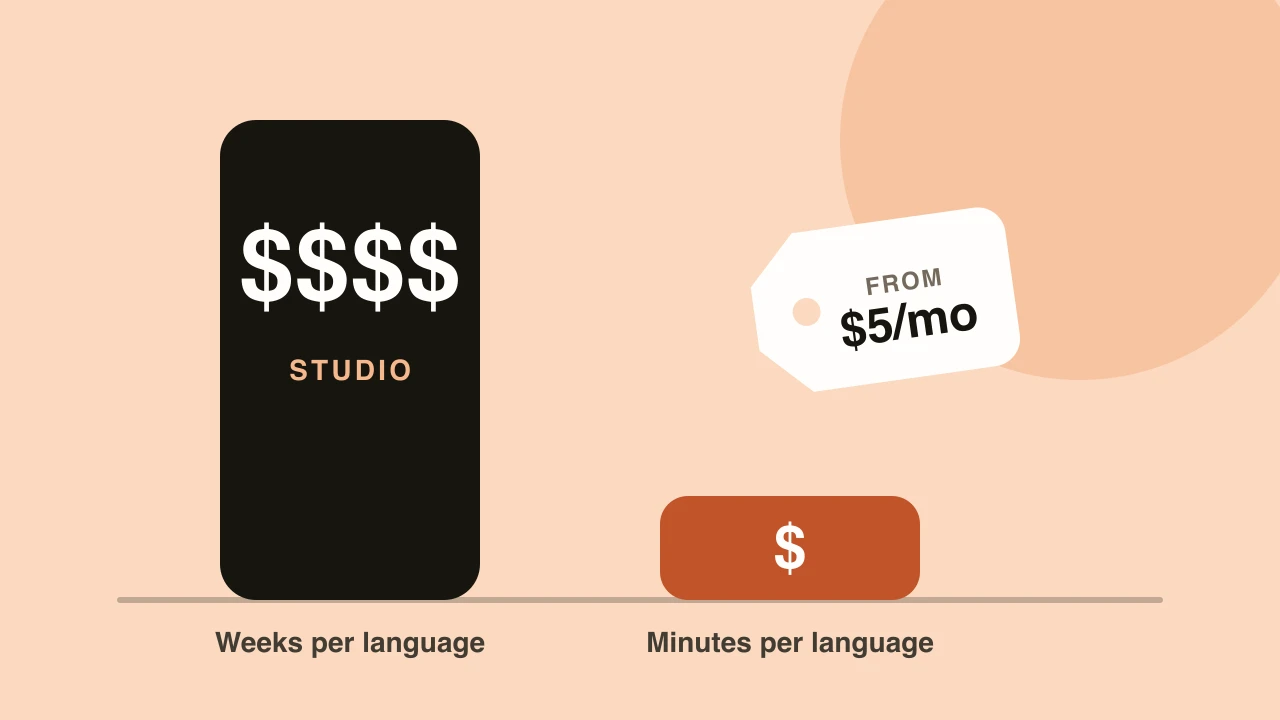
Dubbing used to be much more expensive than subtitling because it meant casting actors and booking studios. AI has narrowed that gap a great deal. For a typical creator, the cost difference is no longer the deciding factor. The deciding factor is the experience you want viewers to have. We cover pricing in more detail in our piece on how much video dubbing costs.
What the evidence says
We’d rather be careful here. You’ll find plenty of claims online that dubbed videos retain viewers X% better than subtitled ones. Most come from vendors, including companies like us, and the numbers vary by content type, audience and market. We don’t think any single figure should drive your decision.
What we’d suggest instead is a small test. Take one video, publish it with subtitles in a language you care about, and publish a dubbed version of the same video. Compare average view duration and drop-off points over a few weeks. That tells you what your audience does, which is the thing that matters.
A few practical points
- Don’t burn subtitles into the video unless you must. Separate caption files give viewers control and are easier to correct later.
- Keep line lengths short. Subtitles that are too long to read in the time they’re displayed frustrate viewers regardless of how accurate they are.
- Review dubbed audio with the sound on. Check for lines that feel rushed and for terms pronounced wrongly.
- Be consistent. If you dub one video in a series, dub the rest, or your audience will notice.
The short version
Use subtitles when the video is short, the speaker’s own voice matters, or the audience is watching on mute. Use a dub when the picture needs attention, the video is long, or you want a native-feeling experience. Use both when you can.
If you’re leaning toward dubbing, you can try Dubtitle free on a short clip and see how your own voice sounds in another language. The AI dubbing page lays out what’s involved.
Frequently asked questions
What is the difference between dubbing and subtitles?
Subtitles keep the original audio and add translated text on screen. Dubbing replaces the original voice with a translated voice track, so viewers listen instead of reading. Subtitles are quicker and cheaper to produce; a dub keeps eyes on the picture.
Is dubbing or subtitles better?
Neither wins everywhere. Subtitles suit interviews, documentaries and sound-off viewing. Dubbing suits tutorials, demos, courses and anything where the picture matters, because viewers are not reading while they watch. The decision framework in this guide helps you choose.
Can I use both dubbing and subtitles on the same video?
Yes, and it often works best. A dubbed audio track with subtitles in the same language helps viewers in noisy places, those who are hard of hearing, and anyone who likes to read along.
Is AI dubbing as good as a human dub?
It depends on the video. AI dubbing is fast and affordable and works well for talking-head, tutorial and explainer content. Film and TV with acting and lip sync still favours human voice actors. Review the result before publishing either way.
Is a dub more expensive than subtitles?
Usually, yes. A subtitle file is plain text and cheap to translate. A dub needs generated or recorded speech. AI dubbing narrows the gap a lot: Dubtitle plans start at $5 a month.